
Something that I've said a few times on this channel is that if I had the means to, I'd make myself a one-to-one replica of the Resident Evil mansion, clues, traps, and all. Of course, when I actually think about that, I always realized that inevitably, I wind up getting taken out by one of my own traps. Well, as it turns out, in a sense, someone beat me to it by several decades, and my fears were not totally unfounded.
For today's episode of 1001 Ways to Die, let's take a look at a real-life Resident Evil house, as well as some motorcycle carnage with a bit of irony to it. Oh, and also, we got a meme turned deadly.
This video is sponsored by Helix. Helix makes premium mattresses and bedding custom-fit to your needs and shipped right to your door.
Everyone sleeps differently, so Helix has you take a sleep quiz to match your body type and sleep preferences. I'm a side sleeper, so Helix set me up with a Sunset mattress. In a Wesper sleep study, participants’ sleep performance was measured after switching to a Helix mattress from another brand. 82% of participants saw an increase in their deep sleep cycle. Say you don't want an entire new mattress. Now, Helix offers a line of mattress toppers.
I got the Ergo Align mattress topper, which is great for preventing back pain and provides more support under your midsection. Helix delivers your mattress right to your door with free shipping in the US.
It comes rolled up in a box, and it's easy to set up. If you're thinking about upgrading your kid's room this back to school season, the Helix Kids mattress is a great option. What makes the Helix Kids mattress so great is that it's two-sided and flippable, stain and water resistant, naturally hypoallergenic, and made with certified materials. To make sure you love your Helix mattress, they have a 100 Nights of Sleep trial. I've been sleeping on a Helix mattress for years, and it's some of the best sleep I've gotten.
Right now, Helix is having their Labor Day sale. Just go to helixsleep. Com/schwing and get 27% off site-wide.
On July second of 2011, over 500 motorcyclists gathered in the town of Onondaga, New York, as they had done every Independence Day weekend for the past 11 years. Why? To protest against the oppressive laws mandating motorcycle helmets. Now, of course, it's no secret that motor cycles can be a little bit dangerous sometimes. According to the US Department of Transportation in 2022, the mortality rate for motorcyclists was 22 times that of people in cars.
There's a lot of factors involved, such as, for instance, the people in cars not paying attention for the motorcyclist. Specialists, while it's speeding. Another big one, of course, is helmets. There's some reports estimating that they prevent as many as 37% of motorcycle-related fatalities, with an even higher rate of them just preventing brain damage. Due to this discrepancy, several states, including New York, legally mandate wearing a motorcycle helmet.
But of course, motorcycles are largely aware of the risks that they take, and some say it should be their choice whether or not they wear a helmet. If you want to take the risk, it's your right to do it.
Whether or not a person wears a helmet, government should not be involved in that. Everybody should have the choice of wearing a helmet or not wearing a helmet.
In 2005, the group behind a yearly protest, American Bikers Aimed Toward Education, or ABATE, published a report claiming that mandatory helmet use doesn’t prevent accidents, showing that a large number of fatalities have to do with alcohol and people who are unlicensed. Furthermore, they believe that these issues could be better addressed by mandatory motorcycle safety courses during the licensing process. While they encouraged people to voluntarily wear helmets, they were opposed to mandating them, and they applied those rules to the rest.
So while some of the 500 bikers wore helmets, many didn't, including a 55-year-old man named Philip Contos. Unfortunately, Philip would be the victim of the very first accident in the history of this event. That day, Philip was on Route 11 riding a 1983 Harley-Davidson. According to some reports, this wasn't the bike that he usually rode, which might have led to what happens next. Some witnesses reported seeing the laces of his boots get caught on a chain. When he feels this happening, he looks down to see what's going on.
Then he looks back up and he sees that he's getting really close to the traffic ahead of him. So instinctively, he just hits the brakes, but he hits the brakes a little too hard, causing his bike to fishtail, meaning that the back tire loses traction and starts to wobble back and forth, like a fish's tail.
He tried to regain control of the vehicle, but he was sent forward, flying over the front of his bike and landing on his head. He did not survive the landing. And according to state troopers, had he been wearing a helmet, he probably would have survived. Of course, the sheer irony of this situation made for a juicy news story. I mean, shit, that's why it's in this video.
But in the days following, Philip's older brother Richard noted to Syracuse.com that he was sick of hearing from reporters taking that approach to the story, and he wanted to talk more about his brother. He told them that his brother was a truck driver and an army vet who hated everything to do with the government. He was always protesting things and given the chance he would do this all over.
Richard also noted that despite the conclusion of the state troopers that a helmet would have saved his life, it was found that his chest had filled with blood after he broke his ribs and his heart lining was punctured.
So it actually was quite possible that a helmet would not have saved his life.
The president of the ABATE chapter responsible for the protest, Christinea Rathbun, offered her condolences to the family and stated the shock of the group. But she also said the incident wouldn't change their stance. It's not going to stop us protesting our right to wear a helmet or not wear a helmet.
It's your own risk. All right, before I get started, in case you're wondering why my voice suddenly sounds like dog shit, it's because between this segment and the last segment, I went to the ECW Arena and blew my voice out, yelling at Bandido versus Hechicero. Great match, but now I sound like fucking dog shit. Anyway, I think one of the absolute worst memes of all time was planking.
If you don't recall, that was that thing where you make your body stiff like a board, like a plank, and you lay face down on the ground or on some surface. This was supposed to be funny somehow. I mean, I guess it was funny in this one Tom Green segment, but that's more because people are investigating him like he's a dead body or something, not just because he's laying down. Most of the planking stuff wasn't like that. It was just like, Hey, I'm laying face down on a table.
That's something you don't usually see, right? But the Tom Green segment was all the way back in 1994, before his MTV show when he was in Canada. So it didn't get that much of attention, and it was only years later that people started crediting Tom Green as the originator of planking.
The larger trend, as we know, it begins in the UK, where it's called the Lying Down Game. Then it makes its way to Australia when a rugby player named David “Wolfman” Williams does it during a game. And it's in Australia that the most infamous planking incident occurs. There had already been a bit of an uproar over the trend when a 20-year-old in Queensland was arrested for planking on a police car, an incident that would be replicated months later in the US to similar results.
Following the arrest, Australian police spoke about planking to the Brisbane Courier-Mail. While we appreciate the activity as light-hearted fun, putting yourself and others at risk and breaking the law will not be tolerated. They warned that planking could be dangerous, so you should always make sure you're practicing safe planking. Just one week later, on May 15th of 2011, the police would be speaking to the Australian press again, and they said that what they had feared would happen had finally actually happened.
During the craze, a 20-year-old named Acton Beale became a member of the group called the Brisbane Planking Association, co-founded by his friend Richard. The group spent a day in the park just planking on various objects and taking pictures for Facebook.
It was all in good fun, but a week later, the fun would end. After a night out drinking around 4:30 a.m., Acton decides that he's going to plank on the balcony of his seventh-story apartment. Unfortunately, he would not be able to maintain his balance, and he plunged seven stories to his death. Following the tragic death, the police emphasized once again that while they get that it's always the joke, you have to do it safely.
In the following weeks, though, they would express disbelief that not only had the death not deterred the fad, they were encountering even more incidents, including multiple cases of people planking on the top of moving cars. In the wake of this, some suggested that Australia should introduce anti-planking laws, but some legal experts argued that this would be impossible to enforce, and the actual instances of planking that were dangerous were already illegal under other laws.
Of course, that didn't stop them from pushing anti-planking laws in the Philippines, but that was more to stifle protests that were using planking as a disruption method. As I said in the intro, I've often thought about what it would be like to live in a real-life Resident Evil house.
Of course, it's not realistic. Whenever I've sat around and actually thought about it, I realized that I would almost certainly die from one of my traps. Like, Oh, yeah, sure. I know I got to put the broken shotgun where I took the regular shotgun from or else it would be a Justin sandwich. But if I wander in my Resident Evil house at 4:00 a.m. drunk off my ass, maybe I won't know where I put my broken shotgun. Recipe for disaster. Little did I know.
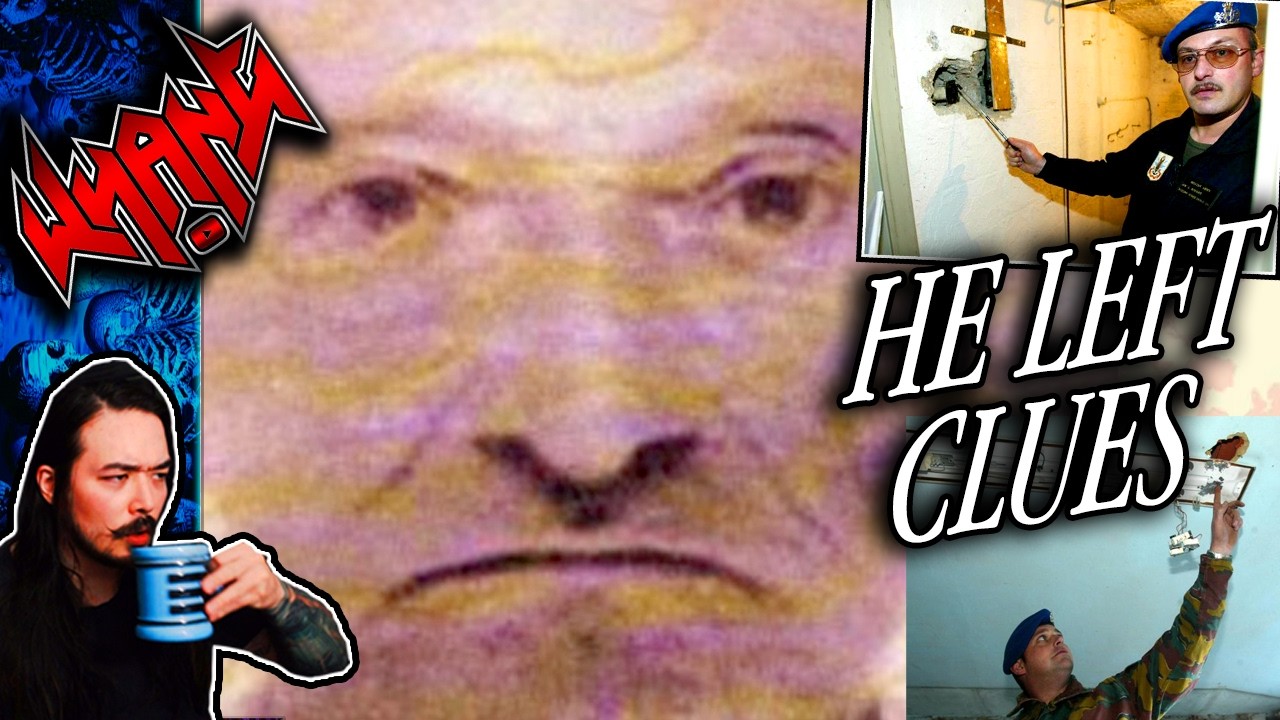
There's a man decades earlier who had already lived this proof of concept, although for very different reasons. The year's 2002, a small town in Belgium named Pont-de-Loup. I guess now is the time when I need to give my obligatory disclaimer that I'm going to butcher absolutely every French name in the story. Police arrive on the scene to investigate reports of a loud bang emanating from the home of a 79-year-old man named Louis Dethy.
When they enter the building, they discover his dead body, sat up against the dresser, bleeding from a gunshot to the neck. An apparent suicide, a sad end for a retired engineer and a father of 14 with 37 grandchildren.
To make sure they've covered all their bases, the police begin to investigate the home for signs of foul play. One of the detectives narrowly escaped being shot during the search. It was clear this was no mere suicide. Realizing that they're in over their heads, they call in a military bomb squad. Over the course of a three-week investigation, they discovered and disarmed 19 traps. [Construction details omitted.] Assisting the men in disarming the booby-trapped house were pages of notes left by Louis.
Of course, he didn't just write down, Okay, shotgun number one is over here, shotgun number two is over there.
No, he left them a series of clues and riddles, like something out of survival horror. For instance, one of the clues read, Cheaper by the Dozen. The clue referred to the movie Cheaper by the Dozen.
I have to note that in a lot of the reporting about this, I'm seeing it said that this is a reference to a scene in which one of the kids throws a plate on another kid's head. I just sat down and watched Cheaper by the Dozen, and maybe I'm completely oblivious, but I did not see that scene. But it's possible that something was mistranslated at some point because this did happen in Belgium.
There is a dinner scene where you see plates lined up on a shelf.
It could be a reference to that.
A lot of the reporting around this case says that he kept these notes as a reminder to himself so he wouldn't set off his own traps. But I can't help but think that he planned for his victims to find these notes. I mean, why else make them into riddles? But why would someone do this? Let's go back to the 1960s. With financial assistance from his mother, Louis Dethy acquires a plot of land and builds the house with his own hands.
It would be in that house that he builds his very large family. But things start to fall apart decades later when his wife catches him cheating on her. The once bustling home soon empties out, leaving Louis all alone. And by all accounts, he was never the same after that. Not only had he alienated his wife and children, but he also began to develop an adversarial relationship with his own mother, the one who paid for all this in the first place.
And as she began to reach the end of her life, it was time to get her affairs in order. Ultimately, as the owner of the property, she would not leave the house to Louis.
Rather, she would leave it to one of his daughters, Jean. But after a several-year-long battle, he lost. The house he built was no longer his, but he'd be damned if the family that abandoned him got to enjoy the fruits of his labor. So he put his engineering skills to use one last time. When speaking to the press, Jean described her father as a strange and cold but intelligent man, as she was sure that these traps were meant for her and the rest of the family.
Of course, while the bomb squad did manage to disarm 19 traps, Louis had actually left 20 clues. The 20th trap was never discovered. Perhaps he just hadn't gone around to building it, or maybe they just couldn't figure out the clue that he had left. The 12 Apostles are ready to work on the pebbles. You guys got any ideas what that means? Anyway, it's all for now.
Thank you to PSYCHO-FRAME for letting me use their music in this video.
If you like this video, turn on notifications and check out my video on people who did medical procedures on themselves. I'm out.
